Fårikål
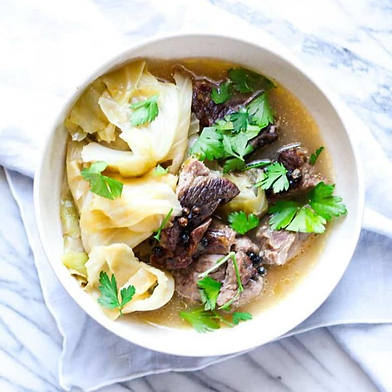
Farikal is a Norwegian stew made with mutton and cabbage, often served with potatoes. I Chose this dish for analysis because it is the national dish of Norway. Over 70% percent of the population of Norway reports preparing this dish at least once during early autumn, and the last Thursday of September is Farikal feast day.
Bacon, Eggs, PB Toast, Milk

This is my meal from an assignment for class. It is pretty self explanatory, and might be considered a basic or common breakfast in the US. I chose it because we were supposed to use the meals we made for the powerpoint. As far as cultural impact goes I don't think there are any. Eggs are a food eaten all around the world and common in many cuisines, chosen for their nutritional goodness and complexity. Toast isn't a huge cultural impact either because someone made bread and said "I'll cook it again". It is similarly common all over with regional variations (such as beans on toast in the UK. Lastly, bacon is eaten many places, though less in regions where religions such as Islam are more dominant.
Ingredients and Sourcing
Ingredients:
- Mutton
- Cabbage
- Peppercorn
- Potatoes (optional)
If this were being prepared in Norway the mutton is most likely imported, as Norway mostly imports lamb. Norway similarly imports lots of cabbage and presumably peppercorn as that grows in more tropical climates, which Norway is not. Potatoes are both imported and grown in Norway and it depends on the season as to whether or not Potatoes are local or not.
The mutton is most likely grown in feedlots but New Zealand and Australia, which export a lot of mutton, produce mutton both in feed lots and pastures. Cabbage seedlings are propagated indoors and transplanted outside when mature. They continue to grow and are harvested, refrigerated and shipped. Peppercorns are similarly commercially farmed, but more often in tropical climates in countries like brazil.

Ingredients:
- Bread, toasted
- Peanut Butter
- Eggs
- Milk
- Bacon
The United States grows a lot of wheat so the wheat used in bread is most likely domestically grown. America both imports and grows peanuts, so peanut butter could be made using local peanuts but not necessarily. Eggs cannot be shipped easily and are thus often grown locally, and the same goes for milk and dairy. Lastly, the US exports more pork than it imports, so the bacon is most likely domestic.
Pork is often commercially grown in feedlots in countries such as the US. Wheat is also commercially grown (again often in the US), and shipped all around the world before being milled into flour and being prepared for bread production.

Sustainability Metric
My metric takes into account the overall volume of water required to create all the aspects of the meal (using gallons of water per pound of ingred, what labor costs and laborer treatment is like in the countries that export the larges amount of each product, and the environmental impacts of the production of each aspect.
Overall, the water required for Farikal is about 793 gallons of water, while for the other meal 1442 gallons of water are required. From an economic standpoint (in the amount of pay for farm laborers in different countries from which ingredients come) I rated the meal from Norway with a 3/5, while my meal was rated 4/5, so generally quite similar. Lastly, the environmental impact of the Farikal is medium/low, with the most prominent being methane emissions from mutton farming, while the environmental impact from my meal was high, due to emissions from cow (dairy) farms, chicken (egg) farms, and heavy fertilizer/pesticide use for wheat growth.
In conclusion, the Norwegian dish Farikal is more sustainable. It requires less water use for its ingredients, the pay in the dominant countries where many of its ingredients are from is fairly good, and the environmental impact is generally small, with the exception of mutton. On the other hand, my meal involves a lot more water use, releases a lot more greenhouses gases from dairy animals, chickens, and pigs used for meat and eggs. Wheat used for the bread isn't as large of an impact but can still negatively affect land, though not necessarily having a large carbon footprint. Peanuts are the most sustainably grown of the ingredients, as they require the least water of all of the parts.